
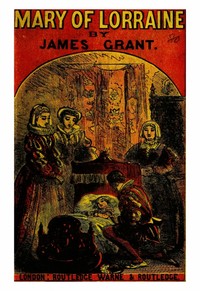
Mary of Lorraine : An historical romance by James Grant
First published in the mid-1800s, James Grant's Mary of Lorraine takes us back to a turbulent chapter in Scotland's story. It's a fictionalized account of a real historical moment, focusing on a period that often gets overshadowed by the drama of her more famous daughter, Mary, Queen of Scots.
The Story
The book follows Mary of Guise—Mary of Lorraine—as she arrives in Scotland from France to marry King James V. It's a strategic union, meant to strengthen ties between the two nations against their common rival, England. But Mary's new life is far from a fairytale. James is often unwell and preoccupied, leaving a power vacuum that his nobles are eager to fill. Mary, a foreigner in a fiercely independent and divided land, has to navigate a court full of suspicion and ambition. She faces constant challenges: managing unruly Scottish lords, dealing with the rising religious tensions of the Reformation, and trying to protect the throne for her infant daughter, the future queen. The plot is a tightrope walk of diplomacy, whispered conspiracies, and the occasional bold move, all set against the rugged backdrop of Scottish castles and the ever-present threat of English invasion.
Why You Should Read It
What makes this book work is Grant's focus on Mary as a person, not just a historical title. She's portrayed as intelligent, resilient, and pragmatic—a woman trying to do her duty in an impossible situation. You feel her frustration and her determination. Grant also has a knack for making the political landscape clear without drowning you in dates and treaties. The supporting cast, from scheming earls to loyal servants, feels vivid. It’s a reminder that history is made by people with conflicting loyalties and personal ambitions, not just by maps and battle plans.
Final Verdict
This is a great pick for readers who enjoy historical fiction with a strong, central character facing tangible political dangers. It's perfect for history buffs who want a closer look at 16th-century Scotland beyond the usual tales of knights and clans, and for anyone who likes stories about underdog leaders. Fair warning: it's a product of its time (the 19th century), so the prose can feel a bit formal by today's standards, but the heart of the story—a woman fighting to secure her family's legacy in a hostile world—remains powerfully engaging.
This historical work is free of copyright protections. Knowledge should be free and accessible.
George Martinez
7 months agoThis work demonstrates a clear mastery of contemporary theories.
Michelle Lee
2 years agoSimply put, the arguments are well-supported by credible references. Absolutely essential reading.
Thomas Sanchez
11 months agoI didn't expect much, but the storytelling feels authentic and emotionally grounded. A true masterpiece.
Robert Thompson
8 months agoAfter hearing about this author multiple times, the depth of research presented here is truly commendable. Don't hesitate to start reading.






Christopher Harris
6 months agoLooking at the bibliography alone, the way the author breaks down the core concepts is remarkably clear. This should be on the reading list of every serious professional.