
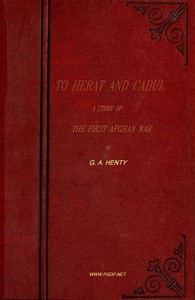
To Herat and Cabul: A Story of the First Afghan War by G. A. Henty
G.A. Henty drops us right into the 1830s, as Britain and Russia play a high-stakes game of empire across Central Asia. Our guide is Angus, a sharp young officer sent with the British-Indian army into Afghanistan. Their mission? To prop up a ruler who'll be friendly to British interests and keep Russia out.
The Story
The story follows Angus from the bustling markets of Herat to the strategic fortress of Cabul (Kabul). At first, things seem to go smoothly for the British. They march in, install their chosen leader, and set up camp. But Henty shows how they quickly become an occupying force, blind to local customs and simmering anger. Angus, often working as a scout or messenger, gets a closer look. He witnesses the growing resentment, the fractured alliances among Afghan tribes, and the overconfidence of his own commanders. The plot builds toward the inevitable explosion: a nationwide uprising that traps the British army in a hostile land during a brutal winter. The heart of the book is the desperate, bloody retreat from Kabul back to India, a journey where the landscape and the people become their deadliest enemies.
Why You Should Read It
Here's what makes this old book feel fresh: it's honest about failure. This isn't a tale of glorious conquest. It's a case study in military hubris and cultural misunderstanding. Through Angus's adventures—which include disguises, narrow escapes, and tense standoffs—Henty makes you ask, 'What were they thinking?' You get the excitement of a adventure novel, but it's wrapped around a real historical tragedy. Angus is a decent guy trying to do his duty, and watching him navigate the mess gives the history a very human face.
Final Verdict
This is a perfect pick for someone who wants their history lesson to feel like an adventure. If you enjoy Bernard Cornwell's Sharpe series or just love stories set in far-off, rugged places, you'll dig this. It's also weirdly relevant for understanding the long, complicated story of foreign involvement in Afghanistan. A word of caution: it's a product of its time (published in 1902), so the attitudes reflect the British Empire's worldview. Read it for the thrilling escape and the stark history lesson, but keep that context in mind. A solid, gripping adventure from a classic storyteller.
This is a copyright-free edition. Access is open to everyone around the world.
Patricia Smith
9 months agoGiven the current trends in this field, the level of detail in the second half of the book is truly impressive. A perfect balance of theory and practical advice.
Matthew White
1 month agoFrom a researcher's perspective, the way it handles controversial points with balance is quite professional. I’ll definitely be revisiting some of these chapters again soon.
Nancy Jones
1 year agoHaving read the author's previous works, the bibliography and references suggest a high level of research and authority. A perfect balance of theory and practical advice.
Barbara Garcia
4 months agoHaving read the author's previous works, the clarity of the writing makes even the most dense sections readable. Truly a masterpiece of digital educational material.





Karen Miller
1 month agoImpressive quality for a digital edition.