About 111 minutes
Geoffery Gambado — Themes and Context
Relationships Society Historical Narratives
25,488 recorded words. 4 minutes difference from this book's estimate.
View Gutenberg source #39115
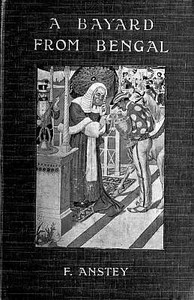
The source record for A Bayard From Bengal Being some account of the Magnificent and Spanking Career of Chunder Bindabun Bhosh,... — Context and Discussion measures this digital text at 26,332 words, 1 hr 55 min estimated reading time, and 6 detected text sections.
The text analysis averages about 25.3 words per sentence, while the detected sections provide another way to judge how the source is divided.
Project Gutenberg metadata also associates the work with “Humorous stories,” connecting these edition facts with the source record’s subject description.
Explore this collection
These alternatives are selected using recorded categories and estimated reading time.
About 111 minutes
Relationships Society Historical Narratives
25,488 recorded words. 4 minutes difference from this book's estimate.
View Gutenberg source #39115About 123 minutes
Relationships Society Historical Narratives
28,216 recorded words. 8 minutes difference from this book's estimate.
View Gutenberg source #38490About 135 minutes
Relationships Society Historical Narratives
30,919 recorded words. 20 minutes difference from this book's estimate.
View Gutenberg source #38872Search stored excerpts and compare books → Choose by your preferences →
Choices use stored catalog measurements. Estimates vary with reading speed. A shared category is a catalog label, not a claim that two books have the same argument or literary quality.
Search reads excerpt text stored with this catalog and links to its associated Gutenberg record. The connection is stored in the site database; this tool does not recheck that every excerpt is word-for-word identical to that external record. Excerpt search does not cover every chapter and does not verify historical publication dates.
Catalog snapshot checked: 2026-09-26. Coverage: 93 public books, 93 available source excerpts.
Calculated from edition completeness, EPUB availability, text structure and catalogue metadata. Not a user rating.
Total of 100 points, scaled to a 2.5-5.0 range. Editions with an empty description or a missing EPUB file are not scored.
Public-domain source text
The source text is kept in the dedicated reader, separate from this catalogue record and its commentary.
The narrative voice of A Bayard From Bengal announces itself immediately as a comic invention. The title page presents the work as written by “Hurry Bungsho Jabberjee, B.A., Calcutta University,” and the preliminary chapter declares the author’s intent to expose “very inferior rubbish” by popular novelists such as “Honbles Kipling, Joshua Barrie, Antony Weyman.” This frame establishes a parody of literary pretension and colonial encounter. The prose is marked by ornate malapropisms, inflated diction, and a deliberate disregard for idiomatic English—phrases like “prolonged consumption of midnight oil” and “magnificent and gullible British Public” signal a playful, irreverent tone. Readers should expect a picaresque plot driven by linguistic excess rather than psychological depth.
Jabberjee’s preface frames the novel as a corrective to British authors who “profess (very, very incorrectly) to give accurate reliable descriptions of Indian, English or Scotch episodes.” This meta-fictional jab sets up the narrator as both a critic and a performer. His prose is studded with mock-heroic flourishes: he describes his own work as “imposing” and “spanking,” and he addresses readers with elaborate deference. The effect is a sustained parody of Victorian literary conventions, particularly the sensation novel and the imperial adventure story. The narrator’s voice remains the central attraction, often overwhelming the plot with its own exuberance.
The excerpts show Mr. Bhosh facing a series of absurd predicaments. In one scene, he is imprisoned for debt and must rely on the gaoler’s daughter, Caroline, who “was transfixed with passionate adoration” for him. The narrator compares Bhosh’s captivity to literary precedents: “Mr Monty Christo met an abbey in his dungeon,” “Mr Picciola watered a flower,” and “Honble Bruce … tamed a spider.” These allusions are deliberately misapplied—Bhosh has no abbey, no flower, no spider—underscoring the gap between romantic heroism and farcical reality. The escape plot, involving a file and a “silken ladder of her own knitting,” is comically botched when Bhosh refuses to use them, preferring to have Caroline steal the keys.
The Derby race provides the novel’s central suspense. Bhosh’s horse, Milky Way, is entered in the race, but he learns from Caroline that “a notorious grandame, to wit the fashionable Duchess of Dickinson, had backed heavily that Milky Way was to fail.” The narrator’s language escalates into melodrama: Bhosh “unravelled the tangled labyrinth of a hideous conspiracy” and “beat his head vehemently against the walls of his cell.” Yet the tone remains comic, as the conspiracy is revealed through gossip and coincidence. The jockey Cadwallader Perkin later appears “with streaming eyes,” begging for mercy, suggesting that the plot will resolve through farcical reversals rather than genuine peril.
The book is presented as an edited manuscript, with F. Anstey listed as editor and reviser. This framing device, common in Victorian parody, allows for ironic distance between the narrator’s grand claims and the actual text. The table of contents includes chapter titles like “The Involuntary Fascinator” and “A Kick from a Friendly Foot,” which promise comic mishaps. Additionally, the volume appends “The Parables of Piljosh, freely translated from the Original Styptic by Another Hand,” extending the parody to biblical and orientalist genres. Readers should attend to how the editorial apparatus—including Bernard Partridge’s illustrations—comments on the narrative’s excesses.
The excerpts offer only a partial view of Bhosh’s adventures, but they reveal a consistent method: the narrator’s inflated language undercuts every dramatic moment, turning potential suspense into comedy. The Derby plot, the prison escape, and the romantic entanglements all serve as vehicles for linguistic play. A first-time reader will benefit from focusing on the narrator’s voice rather than the plot’s coherence, and from noting how the novel parodies both British and Indian literary stereotypes. The appended parables suggest that the satire extends beyond the main narrative, rewarding attention to the book’s layered structure.
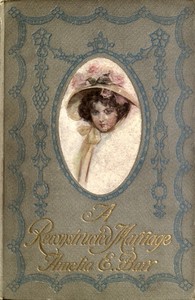
There’s something in Jabberjee’s wild, word-drunk bumbling that reminds me how often we perform our own lives, hoping no one notices the seams. I find myself thinking of that quieter ache in A Reconstructed Marriage, where the performance falters and the longing underneath finally shows. A Reconstructed Marriage — Background and Themes touches that same tender place, only sideways, like an old friend’s confession.
Capture what you thought, learned, and would like to remember.