About 433 minutes
A Woman Perfected — Inside the Classic
Relationships Society Historical Narratives
99,475 recorded words. 0 minutes difference from this book's estimate.
View Gutenberg source #38181
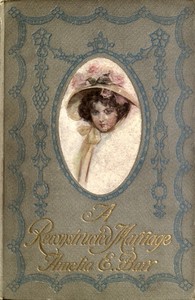
The catalog record for A Reconstructed Marriage — Background and Themes provides practical reading context through 99,374 words, 7 hr 13 min estimated reading time, and 10 detected text sections.
The text analysis averages about 14.2 words per sentence, while the detected sections provide another way to judge how the source is divided.
Project Gutenberg metadata also associates the work with “Married people -- Fiction,” connecting these edition facts with the source record’s subject description.
Explore this collection
These alternatives are selected using recorded categories and estimated reading time.
About 433 minutes
Relationships Society Historical Narratives
99,475 recorded words. 0 minutes difference from this book's estimate.
View Gutenberg source #38181About 436 minutes
Relationships Society Historical Narratives
100,215 recorded words. 3 minutes difference from this book's estimate.
View Gutenberg source #38665About 424 minutes
Relationships Society Historical Narratives
97,510 recorded words. 9 minutes difference from this book's estimate.
View Gutenberg source #36705Search stored excerpts and compare books → Choose by your preferences →
Choices use stored catalog measurements. Estimates vary with reading speed. A shared category is a catalog label, not a claim that two books have the same argument or literary quality.
Search reads excerpt text stored with this catalog and links to its associated Gutenberg record. The connection is stored in the site database; this tool does not recheck that every excerpt is word-for-word identical to that external record. Excerpt search does not cover every chapter and does not verify historical publication dates.
Catalog snapshot checked: 2026-09-26. Coverage: 93 public books, 93 available source excerpts.
Calculated from edition completeness, EPUB availability, text structure and catalogue metadata. Not a user rating.
Total of 100 points, scaled to a 2.5-5.0 range. Editions with an empty description or a missing EPUB file are not scored.
Public-domain source text
The source text is kept in the dedicated reader, separate from this catalogue record and its commentary.
The first chapter of A Reconstructed Marriage opens not with a wedding but with a Saturday morning ritual: Mrs. Traquair Campbell balancing her weekly accounts, a task she considers essential to enjoying the Sabbath. The narrative voice immediately establishes her as a woman of inflexible rules, and the dialogue that follows—sharp, colloquial, and laden with Scottish idiom—reveals a household governed by her pronouncements. Barr's prose moves between brisk narration and extended conversations, where characters reveal themselves through what they say and how they interrupt one another. The mother-in-law's speech is peppered with self-regard and complaint, while her daughter Isabel's replies are measured and deflecting. This opening sets a pattern of domestic friction that the title promises will eventually be reconstructed.
Mrs. Traquair Campbell dominates the early pages through a voice that is both authoritative and anxious. She speaks in long, self-justifying sentences, often repeating herself: “I always made long—I may say lasting impressions, Isabel. It was my way—or gift—a kind of power I had.” Her language is peppered with Scots words like “anent” (about) and “extraordinar',” and she frequently invokes social standing and proper conduct. Yet her authority is undercut by her own worries—about her son Robert's temper, about the bride Christina's dress, about the plainness of a dinner. Barr uses these verbal tics to build a character who is controlling but also vulnerable, a mother-in-law who cannot stop talking about herself even as she tries to manage everyone else.
The excerpts are almost entirely dialogue, and Barr uses conversation as a form of subtle combat. When Isabel suggests that Christina might wear her own wedding dress, Mrs. Campbell retorts, “We do not want any one in white satin but Christina.” The exchange reveals a household where every detail—from the bride's attire to the menu of mutton broth and collops—is a site of negotiation. The mother-in-law's boast about Sir Thomas's gifts (“the sum-total o' Sir Thomas Wynton's gifts to my daughter might reach all o' a ten thousand pounds”) is met with Isabel's quiet correction: “That is just like yourself, mother. I do wish you would not boast so much.” Barr's pacing in these scenes is deliberate; the reader is drawn into the rhythm of interruption, deflection, and underlying tension that defines the Campbell home.
Barr alternates between rapid-fire exchanges and moments of deliberate pause. When Isabel enters her mother's room, the narrative slows: “No notice was taken of the intruder for a few moments.” This small beat signals the weight of the interruption. Later, Mrs. Campbell's monologue about her own “power” is followed by Isabel's flat reply: “Christina seems very happy, mother.” The shift in topic is abrupt, a verbal sidestep that avoids direct confrontation. The pacing mirrors the domestic dynamics—bursts of complaint and self-praise, then retreat into silence or deflection. These rhythms suggest that the real action of the novel lies not in events but in the accumulation of small, tense moments that will eventually demand resolution.
Readers approaching A Reconstructed Marriage should attend to the cadence of its dialogue and the spaces between speeches. Barr builds her story not through dramatic incident but through the slow accretion of domestic detail and conversational friction. The title hints at change, but the excerpts show a world where change must be wrestled from habit and pride. Pay attention to who speaks, who interrupts, and who falls silent—these choices reveal the fault lines that the novel will explore.
Reading about the Campbell household’s slow, quiet rebuilding, I found myself thinking of another sort of reconstruction entirely—one set amidst French chaos, where honour itself must be pieced together. There’s a similar weight in The Maid of Honour: A Tale of the Dark Days of France. Vol. 3 (of 3) — Themes and Context, a different stillness under pressure. Both linger on what remains when everything else falls away.
A brief reflection can help important ideas stay with you longer.