About 433 minutes
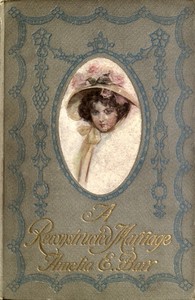
A Reconstructed Marriage — Background and Themes
Relationships Society Historical Narratives
99,374 recorded words. 0 minutes difference from this book's estimate.
View Gutenberg source #36490

A Woman Perfected — Inside the Classic can be approached with a clearer sense of reading commitment from its source measurements: 99,475 words, 7 hr 13 min estimated reading time, and 12 detected text sections.
The text analysis averages about 16.9 words per sentence, while the detected sections provide another way to judge how the source is divided.
Project Gutenberg metadata also associates the work with “Inheritance and succession -- Fiction,” connecting these edition facts with the source record’s subject description.
Explore this collection
These alternatives are selected using recorded categories and estimated reading time.
About 433 minutes
Relationships Society Historical Narratives
99,374 recorded words. 0 minutes difference from this book's estimate.
View Gutenberg source #36490About 436 minutes
Relationships Society Historical Narratives
100,215 recorded words. 3 minutes difference from this book's estimate.
View Gutenberg source #38665About 424 minutes
Relationships Society Historical Narratives
97,510 recorded words. 9 minutes difference from this book's estimate.
View Gutenberg source #36705Search stored excerpts and compare books → Choose by your preferences →
Choices use stored catalog measurements. Estimates vary with reading speed. A shared category is a catalog label, not a claim that two books have the same argument or literary quality.
Search reads excerpt text stored with this catalog and links to its associated Gutenberg record. The connection is stored in the site database; this tool does not recheck that every excerpt is word-for-word identical to that external record. Excerpt search does not cover every chapter and does not verify historical publication dates.
Catalog snapshot checked: 2026-09-26. Coverage: 93 public books, 93 available source excerpts.
Calculated from edition completeness, EPUB availability, text structure and catalogue metadata. Not a user rating.
Total of 100 points, scaled to a 2.5-5.0 range. Editions with an empty description or a missing EPUB file are not scored.
Public-domain source text
The source text is kept in the dedicated reader, separate from this catalogue record and its commentary.
The novel opens with a precise date—Thursday, April 3—and a sudden medical crisis: Donald Lindsay is prostrated by a stroke of apoplexy, the immediate cause surmised to be mental. The narration quickly establishes a pattern of withheld information: the study door is locked, knockings go unheeded, and the cause of Lindsay's agitation remains unspecified. This reticence extends to the characters' motives. When Nora Lindsay later leaves Cloverlea, she gives no address, and the butler Morgan deliberately misleads a pursuer about the time of her departure. The text thus signals that secrets and incomplete explanations will drive the plot.
The first chapter introduces a household in crisis through concrete, sensory details. Donald Lindsay, normally a dour and silent man, becomes unusually talkative at lunch, then vanishes. The locked study door and the failure of knockings to gain a response create a contained mystery. The narrative voice is restrained, reporting events without interior access: we learn only what the servants and the daughter Nora observe. The stroke is described as a physical event with a mental cause, but the text does not explain what agitated Lindsay. This technique of withholding cause while showing effect recurs throughout the excerpts, building suspense through what is left unsaid.
Nora's departure from Cloverlea is marked by practical desperation. She leaves with eight pounds, four shillings, and twopence, heading to London with a plan derived from a story she read about a young woman in Newington Butts. The narration notes her ignorance of London: she does not know to leave her trunk in a cloak-room or to cross the city cheaply. This detail grounds her flight in economic reality rather than melodrama. The butler Morgan's evasiveness when questioned by Mrs. Banyard and the Hon. Robert Spencer underscores the social stakes: Nora's disappearance threatens the order of the household, and those left behind scramble to interpret her motives.
The excerpts show a pattern of pursuit that fails to close the distance. Mrs. Banyard accuses Nora of a Quixotic notion bent on suffering martyrdom, while Robert Spencer laughs but undertakes to find her within twenty-four hours—a promise the narrator immediately undercuts: he was undertaking more than he was able to perform. The text thus establishes that the searchers operate with incomplete knowledge and misplaced confidence. Nora's destination, Newington Butts, is presented as a literary borrowing rather than firsthand knowledge, suggesting her vulnerability. The narrative withholds her immediate fate, leaving the reader with the tension between her limited resources and the determined but ineffective search.
The excerpts offer a portrait of a young woman navigating social and economic constraints with limited information. Readers should attend to how the narrative distributes knowledge among characters—the butler knows more than he says, the pursuers act on assumptions, and Nora's own plans are shaped by fiction rather than experience. The novel's title, A Woman Perfected, invites scrutiny of what perfection might mean in a world where a stroke can upend a household and eight pounds must last until work is found.
That grey afternoon, the rain blurred the windows while I sat with A Woman Perfected, feeling Nora’s eight pounds weigh heavier than any fortune. Her quiet desperation lingered after I closed it, and my hand drifted to another shelf, pulling down The Passionate Elopement — Edition Insights, where escape seemed lighter, though no less complicated. Both left me staring out at the wet street, wondering about doors half-opened.
Use these questions to collect your thoughts before moving on.