About 433 minutes
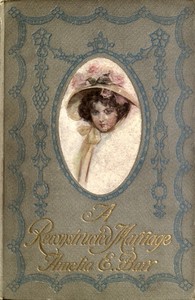
A Reconstructed Marriage — Background and Themes
Relationships Society Historical Narratives
99,374 recorded words. 9 minutes difference from this book's estimate.
View Gutenberg source #36490
By Right of Purchase — Context and Discussion can be approached with a clearer sense of reading commitment from its source measurements: 97,510 words, 7 hr 4 min estimated reading time, and 9 detected text sections.
The text analysis averages about 16.1 words per sentence, while the detected sections provide another way to judge how the source is divided.
Project Gutenberg metadata also associates the work with “Married people -- Fiction,” connecting these edition facts with the source record’s subject description.
Explore this collection
These alternatives are selected using recorded categories and estimated reading time.
About 433 minutes
Relationships Society Historical Narratives
99,374 recorded words. 9 minutes difference from this book's estimate.
View Gutenberg source #36490About 433 minutes
Relationships Society Historical Narratives
99,475 recorded words. 9 minutes difference from this book's estimate.
View Gutenberg source #38181About 436 minutes
Relationships Society Historical Narratives
100,215 recorded words. 12 minutes difference from this book's estimate.
View Gutenberg source #38665Search stored excerpts and compare books → Choose by your preferences →
Choices use stored catalog measurements. Estimates vary with reading speed. A shared category is a catalog label, not a claim that two books have the same argument or literary quality.
Search reads excerpt text stored with this catalog and links to its associated Gutenberg record. The connection is stored in the site database; this tool does not recheck that every excerpt is word-for-word identical to that external record. Excerpt search does not cover every chapter and does not verify historical publication dates.
Catalog snapshot checked: 2026-09-26. Coverage: 93 public books, 93 available source excerpts.
Calculated from edition completeness, EPUB availability, text structure and catalogue metadata. Not a user rating.
Total of 100 points, scaled to a 2.5-5.0 range. Editions with an empty description or a missing EPUB file are not scored.
Public-domain source text
The source text is kept in the dedicated reader, separate from this catalogue record and its commentary.
The catalog subjects for By Right of Purchase list married people, Western Canada, and farm life, but the excerpts reveal a novel more concerned with the strain of social performance than with agricultural labor. The opening chapter dwells on Barrock-holme, an English estate, and Leland's contempt for its heir, Jimmy Denham, before any prairie scene appears. The prairie itself enters only in Chapter VI, and even then, the narrative quickly shifts to interior conflicts: Carrie's regret, Urmston's wounded pride, and Leland's quiet watchfulness.
This note traces how the text's actual emphases—on class distinction, emotional withholding, and the gap between public roles and private feelings—complicate the simple rural romance the catalog might suggest.
The catalog subject "Married people" implies a domestic focus, but the excerpts show marriage as a site of tension rather than partnership. Carrie tells Urmston, "I am as happy as I deserve to be," a line that hedges contentment with guilt. Leland's swift handshake when meeting Urmston is described as suggesting "unquestioning confidence," yet the narrative undercuts this by noting Carrie's gratitude for his speed—implying she feared a scene. Eveline Annersly openly wishes Urmston had broken his leg before arriving, and Gallwey jokes about badger-holes causing accidents. The marriage is not a settled state but a precarious arrangement, constantly tested by old attachments and new suspicions.
Though the catalog lists "Farm life — Canada" and "Canada, Western," the excerpts treat the prairie less as a setting for agricultural detail than as a backdrop for social maneuvering. Urmston, an English visitor, strolls through a "birch bluff" smoking Leland's cigars, and his thoughts are not on crops but on Carrie's "matter-of-fact friendliness." Leland's own farming is mentioned only obliquely—he returns "hot and dusty" from riding—while the narrative lingers on his indifference to Urmston's attentions, which Urmston finds "galling." The land itself is a stage for class performance: Urmston expects regret and sympathy; Carrie offers none. The prairie does not transform characters; it exposes their ingrained social reflexes.
Bindloss's prose is notable for what it leaves unsaid. Characters rarely declare their emotions directly; instead, the narrator reports physical cues: Carrie's cheeks burn, Urmston speaks "a trifle hoarsely," Leland swings down "hot and dusty." The dialogue is clipped and evasive. When Carrie says "the time when I might have done so has gone," she refers to trust, but the sentence hangs without elaboration. The narrative voice itself is detached, often observing characters from a slight distance—"Leland wondered vaguely," "Urmston felt that a few hints of regret... would have been considerably more appropriate." This restraint creates a texture of suppressed feeling, where the most charged moments occur in the gaps between words.
Readers approaching By Right of Purchase expecting a straightforward pioneer romance will find instead a novel of manners transplanted to the prairie, where emotional economy matters as much as wheat yields. The catalog subjects point to plot elements, but the text's real work is in the silences, the half-spoken resentments, and the careful choreography of pride. Pay attention to who speaks and who watches—the novel's meaning often lies in the pause before a reply.
Bindloss’s prairie couples wear their pride like a second coat against the frost, and I’ve often thought that quiet stubbornness echoes through the longer landscapes of World's End: A Story in Three Books — A Reader’s Guide, where endurance isn’t shouted, just kept. Both books seem to trust the slow thaw more than the sudden fire. That restraint, I find, ages well on the shelf.
Capture what you thought, learned, and would like to remember.