About 433 minutes
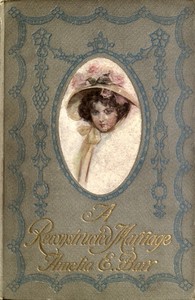
A Reconstructed Marriage — Background and Themes
Relationships Society Historical Narratives
99,374 recorded words. 3 minutes difference from this book's estimate.
View Gutenberg source #36490
The source record for The Courtship of Morrice Buckler: A Romance — A Closer Reading measures this digital text at 100,215 words, 7 hr 16 min estimated reading time, and 11 detected text sections.
The text analysis averages about 16.8 words per sentence, while the detected sections provide another way to judge how the source is divided.
Project Gutenberg metadata also associates the work with “Historical fiction,” connecting these edition facts with the source record’s subject description.
Explore this collection
These alternatives are selected using recorded categories and estimated reading time.
About 433 minutes
Relationships Society Historical Narratives
99,374 recorded words. 3 minutes difference from this book's estimate.
View Gutenberg source #36490About 433 minutes
Relationships Society Historical Narratives
99,475 recorded words. 3 minutes difference from this book's estimate.
View Gutenberg source #38181About 424 minutes
Relationships Society Historical Narratives
97,510 recorded words. 12 minutes difference from this book's estimate.
View Gutenberg source #36705Search stored excerpts and compare books → Choose by your preferences →
Choices use stored catalog measurements. Estimates vary with reading speed. A shared category is a catalog label, not a claim that two books have the same argument or literary quality.
Search reads excerpt text stored with this catalog and links to its associated Gutenberg record. The connection is stored in the site database; this tool does not recheck that every excerpt is word-for-word identical to that external record. Excerpt search does not cover every chapter and does not verify historical publication dates.
Catalog snapshot checked: 2026-09-26. Coverage: 93 public books, 93 available source excerpts.
Calculated from edition completeness, EPUB availability, text structure and catalogue metadata. Not a user rating.
Total of 100 points, scaled to a 2.5-5.0 range. Editions with an empty description or a missing EPUB file are not scored.
Public-domain source text
The source text is kept in the dedicated reader, separate from this catalogue record and its commentary.
The novel opens with a striking image: the narrator, Morrice Buckler, shifts books in his library and a dusty Elzevir Horace falls open at the Palinodia. The leaf bears a plan of Lukstein Castle, and as he gazes, the blurred outline becomes a vivid picture—'the great angle of the building, the level row of windows, the red roofs of the turrets, the terrace, and the little pinewood pavilion.' This moment of involuntary memory frames the entire narrative as a recollection of a 'brief but eventful period' that transformed a bookish student into a man of action. Mason immediately establishes a tension between the quiet life of letters and the violent, romantic world that awaits.
In a key scene, Morrice examines a tray of curios while Ilga, his hostess, watches him with peculiar intensity. She draws his attention to a miniature of a dark-haired girl, painted on ivory, that 'shone like a gem' among older trinkets. When Morrice admits a vague familiarity, Ilga presses him with ironic repetition—'Look again! Look again, Mr. Buckler!'—and her eyes darken with excitement. The exchange is charged with unspoken knowledge: Ilga seems to know something about Morrice's past that he himself cannot recall. Her servant Otto Krax stands stolidly by, a silent witness. The miniature becomes a catalyst for suspicion, and Ilga's tone shifts from tender appeal to scornful irony, leaving Morrice 'completely at a loss.'
Mason builds the narrative around what is not said. Ilga hints at knowing Morrice's story—'there was a certain accent of appeal in her voice, very tender and sweet, as though she knew my story and was ready to forgive it'—yet she never states it directly. Morrice himself is haunted by a past he cannot fully grasp, and the reader is left to infer from fragments. The novel's subtitle promises 'a record of the growth of an English gentleman under strange and difficult circumstances,' and the excerpts show a protagonist caught between his own ignorance and others' hidden knowledge. The tension is heightened by the setting: a room where Otto Krax blocks the light, a tray of antiques that hint at 'bygone times' but 'tell so provokingly little.'
The first chapter establishes a retrospective frame: Morrice writes 'some while afterwards in his own hand,' and the narrative is edited by A. E. W. Mason. This layered authorship—Morrice as narrator, Mason as editor—creates a sense of distance and reflection. The opening paragraph, with its 'glistening memories' and the physical book that unlocks them, emphasizes the act of remembering. The prose is measured, even melancholic: 'this long time since I have lost the savour of books.' Yet the story that follows is one of action, swords, and escape. Mason uses the contrast between the contemplative narrator and the adventurous younger self to generate a quiet tension. The chapter titles—'Tells of an Interrupted Message,' 'I Reach London, and There Make an Acquaintance'—promise a picaresque journey, but the voice remains that of a man looking back.
Readers should attend to the miniature as a recurring motif and to the way Mason withholds information, letting objects and glances carry meaning. The Tyrolean setting—Lukstein Castle, the pavilion, the terrace—is drawn with precision, and the plan of the castle mentioned in the opening may reward attention. The novel is less a straightforward romance than a study of how the past resurfaces through chance objects and half-forgotten faces.
Years between the stacks, I’ve watched The Courtship of Morrice Buckler teach a quiet lesson—how a soul shaped by shelved volumes finds itself tangled in another’s secret history. That same tender isolation lives in A Little Wizard — Themes and Context, where a boy’s inner world whispers against the louder rooms around him. Both simply breathe the truth: we are never quite alone in our hidden loyalties.
Capture what you thought, learned, and would like to remember.