About 257 minutes
A Galahad of the Creeks; The Widow Lamport — Inside the Classic
Technology Airships Imagined Futures
58,922 recorded words. 26 minutes difference from this book's estimate.
View Gutenberg source #38306
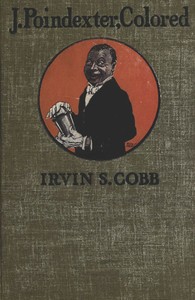
The source record for J. Poindexter, Colored — Story, Setting & Ideas measures this digital text at 53,032 words, 3 hr 51 min estimated reading time, and 6 detected text sections.
The text analysis averages about 21.5 words per sentence, while the detected sections provide another way to judge how the source is divided.
Project Gutenberg metadata also associates the work with “New York (N.Y.) -- Fiction,” connecting these edition facts with the source record’s subject description.
Explore this collection
These alternatives are selected using recorded categories and estimated reading time.
About 257 minutes
Technology Airships Imagined Futures
58,922 recorded words. 26 minutes difference from this book's estimate.
View Gutenberg source #38306About 274 minutes
Technology Airships Imagined Futures
63,008 recorded words. 43 minutes difference from this book's estimate.
View Gutenberg source #36950About 187 minutes
Technology Airships Imagined Futures
43,008 recorded words. 44 minutes difference from this book's estimate.
View Gutenberg source #36711Search stored excerpts and compare books → Choose by your preferences →
Choices use stored catalog measurements. Estimates vary with reading speed. A shared category is a catalog label, not a claim that two books have the same argument or literary quality.
Search reads excerpt text stored with this catalog and links to its associated Gutenberg record. The connection is stored in the site database; this tool does not recheck that every excerpt is word-for-word identical to that external record. Excerpt search does not cover every chapter and does not verify historical publication dates.
Catalog snapshot checked: 2026-09-26. Coverage: 93 public books, 93 available source excerpts.
Calculated from edition completeness, EPUB availability, text structure and catalogue metadata. Not a user rating.
Total of 100 points, scaled to a 2.5-5.0 range. Editions with an empty description or a missing EPUB file are not scored.
Public-domain source text
The source text is kept in the dedicated reader, separate from this catalogue record and its commentary.
From the first sentence, J. Poindexter, Colored announces itself as a first-person narrative in dialect: “My name is J. Poindexter. But the full name is Jefferson Exodus Poindexter, Colored.” The narrator explains that a white friend urged him to write down his experiences in New York, promising to fix the spelling and punctuation. This framing device establishes a voice that is both self-aware and mediated—Poindexter claims ownership of the content while acknowledging editorial intervention.
The opening chapter, “Down Yonder,” quickly situates the narrator’s origins and his sudden move north. The prose is dense with colloquial rhythms and specific details, such as the naming after a white family and a biblical figure. Cobb uses this voice to create a character who is observant, skeptical, and wry, setting the tone for the episodic chapters that follow.
The editorial note that opens the text—explaining that a white friend will “fix up the spelling” and “attend to the punctuating”—immediately raises questions about authenticity and control. Poindexter insists that “all the rest of it will be my own just like I puts it down,” yet the reader is aware of a layer of correction. This tension between the narrator’s raw account and the promised polish is a recurring structural feature. In the excerpts, the prose maintains irregular spelling and syntax (“I never learned to puncture”), which the framing suggests is original. The reader must decide how much of the voice is Poindexter’s and how much is Cobb’s construction. This setup invites attention to the gaps between what is said and how it is presented.
In the later excerpt, Poindexter describes a figure called the Black Prophet of Abyssinia, who appears in Harlem wearing “a flowing garment of purple like the night-shirt of a king” and a turban. The Prophet claims to have been anointed by an angel in a dream and now preaches a return to Africa. Poindexter’s reaction is sharply skeptical: “it sounds more to me like an inspired real-estate scheme.” He notes the financial structure—joining fees and monthly dues—and dismisses the vision as a con. This passage reveals Poindexter’s pragmatic, distrustful nature and his loyalty to “my own white folks.” The Prophet episode is one of several set pieces that showcase Cobb’s use of dialect to render a character’s critical perspective on contemporary movements.
The table of contents lists twenty-two chapters with titles like “Down Yonder,” “North-Bound,” “Harlem Heights,” “Movie-Land,” and “White Hopes.” This suggests a picaresque structure, moving from rural South to urban North and through various milieus: clubs, studios, business deals, and social scenes. The excerpts show a pattern of anecdotal narration, where Poindexter recounts specific encounters and his reactions. The Prophet story, for instance, is framed as a memory triggered by a conversation among friends. This episodic approach allows Cobb to explore a range of topics—race, religion, entertainment, ambition—without a tight plot. Readers should expect a series of vignettes held together by the narrator’s consistent voice and his journey from outsider to observer.
Cobb’s use of dialect is not merely decorative; it shapes how Poindexter’s intelligence and social position are conveyed. His grammar and word choices mark him as uneducated by standard measures, yet his observations are shrewd. For example, he describes the Prophet’s oratory as “just overflowing with noble large words” while immediately seeing through the scheme. This juxtaposition of vernacular speech and sharp insight complicates stereotypes. The narrative also touches on class distinctions within the Black community, as when Poindexter refers to “us Pastimers in good standing.” The excerpts do not reveal the full arc of his social ascent or conflicts, but they establish a narrator who navigates multiple worlds—southern, northern, white, Black—with a wry, self-protective humor.
As you read, pay attention to how the framing device—the white editor who corrects spelling—affects your trust in the narrative. Notice when Poindexter’s voice seems most direct and when the text may be mediating his words. The episodic chapters reward attention to recurring motifs: money, mobility, and the performance of identity. Cobb’s novel offers a specific, early-20th-century perspective on race and urban life, filtered through a narrator who is both participant and critic.
I keep thinking about how Poindexter carried his hometown inside him, even amid Harlem’s noise. That quiet persistence of place—how a person’s voice shapes what they notice—reminds me of the gentle unraveling in The Last Straw — A Closer Reading. Both feel like letters left half-open, asking not for answers, but for company while reading.
Build a private reading journal entry for this title.