About 154 minutes
Ormond; Or, The Secret Witness. Volume 3 (of 3) — A Reader’s Guide
Technology Airships Imagined Futures
35,344 recorded words. 21 minutes difference from this book's estimate.
View Gutenberg source #36291
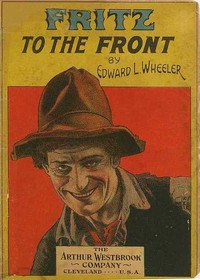
The catalog record for Fritz to the Front, or, the Ventriloquist Scamp-Hunter — Background and Themes provides practical reading context through 30,375 words, 2 hr 13 min estimated reading time, and 5 detected text sections.
The text analysis averages about 15.8 words per sentence, while the detected sections provide another way to judge how the source is divided.
Project Gutenberg metadata also associates the work with “Detective and mystery stories,” connecting these edition facts with the source record’s subject description.
Explore this collection
These alternatives are selected using recorded categories and estimated reading time.
About 154 minutes
Technology Airships Imagined Futures
35,344 recorded words. 21 minutes difference from this book's estimate.
View Gutenberg source #36291About 84 minutes
Technology Airships Imagined Futures
19,146 recorded words. 49 minutes difference from this book's estimate.
View Gutenberg source #38443About 82 minutes
Technology Airships Imagined Futures
18,824 recorded words. 51 minutes difference from this book's estimate.
View Gutenberg source #37651Search stored excerpts and compare books → Choose by your preferences →
Choices use stored catalog measurements. Estimates vary with reading speed. A shared category is a catalog label, not a claim that two books have the same argument or literary quality.
Search reads excerpt text stored with this catalog and links to its associated Gutenberg record. The connection is stored in the site database; this tool does not recheck that every excerpt is word-for-word identical to that external record. Excerpt search does not cover every chapter and does not verify historical publication dates.
Catalog snapshot checked: 2026-09-26. Coverage: 93 public books, 93 available source excerpts.
Calculated from edition completeness, EPUB availability, text structure and catalogue metadata. Not a user rating.
Total of 100 points, scaled to a 2.5-5.0 range. Editions with an empty description or a missing EPUB file are not scored.
Public-domain source text
The source text is kept in the dedicated reader, separate from this catalogue record and its commentary.
The opening chapter of Fritz to the Front drops readers into a crowded Philadelphia ferry bound for Atlantic City, where a young woman sits alone among roughs and bruisers. The scene establishes a world of cheap excursions and Dock Street "soothing syrup," where social types mix uneasily. Later, the hero Fritz finds himself bound and adrift in a small boat, his German-accented speech—"Py shimminy dunder!"—marking him as an outsider. The excerpts reveal a story built on physical peril, dialect humor, and the detective's resourcefulness in the face of helplessness.
The novel opens with a catalog of excursion-goers: "representatives of every trade," a mix of nationalities, young and old, and "roughs, bruisers, and bummers." This heterogeneous crowd is more than local color; it sets up a social landscape where danger and comedy arise from class friction. The young lady at the stern, unaccompanied and stylishly dressed, becomes a target for the roughs, suggesting that the story will hinge on threats to vulnerable individuals. Wheeler uses the ferry as a microcosm of Philadelphia's working class, where the promise of escape is shadowed by the presence of those who prey on the unwary.
Fritz's predicament—bound hand and foot in a drifting boat—is a set piece of dime-novel suspense. The narrative dwells on his physical limitations: he cannot use his hands or feet, the boat has no oars, and the tide is carrying him out to sea. Yet his response is methodical: he gnaws through leather straps, then uses his hands as propellers. The scene balances alarm with dark comedy, as Fritz mutters about being swallowed by a whale. His German dialect—"I don'd know vedder I can swum dot furder or not"—adds a layer of verbal humor to the life-or-death situation, a pattern typical of Wheeler's detective series.
Fritz's voice is the most distinctive element in the excerpts. His speech is thick with German-inflected spelling and syntax: "Py shimminy, dot ish goot, anyhow." This dialect marks him as both comic and capable—a foreigner who outsmarts native-born scoundrels. The excerpts also hint at his detective methods: he recognizes Hartly, a "sentenced smuggler," at a glance, and his ventriloquism (mentioned in the title) is implied by his ability to throw his voice. The combination of dialect humor and quick thinking aligns Fritz with other Wheeler creations like Deadwood Dick, blending frontier toughness with urban street smarts.
Readers should pay attention to how Wheeler balances farce and peril. The excerpts show a writer who uses dialect not just for laughs but to define character, and who builds suspense from simple physical constraints. The novel's title promises ventriloquism, but the surviving text emphasizes action and voice over elaborate tricks. Approach Fritz to the Front as a fast-paced entertainment where the hero's accent is as much a tool as his wits.
Fritz’s drifting boat, with his voice thrown across the water to fool a scoundrel—there’s a loneliness in that ventriloquism, a man speaking from elsewhere. I felt the same quiet ache reading J. Poindexter, Colored — Story, Setting & Ideas, where a different kind of disguise is worn, and the real voice waits, patient, beneath. Both books know how much of us is unseen.
Answer a few questions and save a private reflection on this device.