About 82 minutes
The New Paul and Virginia; Or, Positivism on an Island — Background and Themes
Technology Airships Imagined Futures
18,824 recorded words. 2 minutes difference from this book's estimate.
View Gutenberg source #37651
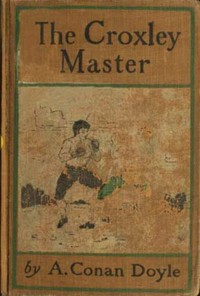
The Croxley Master: A Great Tale Of The Prize Ring — Inside the Classic can be approached with a clearer sense of reading commitment from its source measurements: 19,146 words, 1 hr 24 min estimated reading time, and 2 detected text sections.
The text analysis averages about 14.8 words per sentence, while the detected sections provide another way to judge how the source is divided.
Project Gutenberg metadata also associates the work with “Boxers (Sports) -- Fiction,” connecting these edition facts with the source record’s subject description.
Explore this collection
These alternatives are selected using recorded categories and estimated reading time.
About 82 minutes
Technology Airships Imagined Futures
18,824 recorded words. 2 minutes difference from this book's estimate.
View Gutenberg source #37651About 133 minutes
Technology Airships Imagined Futures
30,375 recorded words. 49 minutes difference from this book's estimate.
View Gutenberg source #37149About 154 minutes
Technology Airships Imagined Futures
35,344 recorded words. 70 minutes difference from this book's estimate.
View Gutenberg source #36291Search stored excerpts and compare books → Choose by your preferences →
Choices use stored catalog measurements. Estimates vary with reading speed. A shared category is a catalog label, not a claim that two books have the same argument or literary quality.
Search reads excerpt text stored with this catalog and links to its associated Gutenberg record. The connection is stored in the site database; this tool does not recheck that every excerpt is word-for-word identical to that external record. Excerpt search does not cover every chapter and does not verify historical publication dates.
Catalog snapshot checked: 2026-09-26. Coverage: 93 public books, 93 available source excerpts.
Calculated from edition completeness, EPUB availability, text structure and catalogue metadata. Not a user rating.
Total of 100 points, scaled to a 2.5-5.0 range. Editions with an empty description or a missing EPUB file are not scored.
Public-domain source text
The source text is kept in the dedicated reader, separate from this catalogue record and its commentary.
The story opens not in a ring but at a surgery desk, where Robert Montgomery sits with his head in his hands, the grimy window framing a vista of 'Cyclopean pillars' of chimneys. His despair is financial: he needs sixty pounds to complete his medical degree. When he asks his employer, Dr. Oldacre, for a loan, the doctor's 'vaguely benevolent' manner gives way to a tight mouth and averted eyes. The request is refused. This early scene establishes a world where respectability is a brittle performance and money governs fate—a world that will soon propel Montgomery into the prize ring.
The fight pits Montgomery, described as 'symmetrical as a Greek statue,' against the Croxley Master, a 'squat, formidable figure' with a 'monstrous' chest and a leg distorted from years of battle. The Master's skin is 'dusky and mottled,' his breast thatched with tangled black hair, his teeth 'beaten out of him in twenty years of battle.' Montgomery, by contrast, is 'trained to a hair,' his skin 'gleaming like silk,' every muscle rippling. The narrator compares them to a bulldog and a high-bred terrier. This is not merely a physical contrast but a social one: the educated, symmetrical amateur versus the hardened professional, each shaped by a different code of living.
Dialect marks the divide. The Master speaks in a thick Yorkshire vernacular—'Happen I might draw my hand across thy face'—while Montgomery uses standard English. The woman in the window, who scoffs at Montgomery as a 'thread-paper yoong gentleman,' speaks in the same rough tongue. The referee from London, Mr. Stapleton, arrives with a 'fur-collared overcoat' and a 'very shiny top-hat,' his speech clipped and authoritative. Even the betting reflects class: Ted Barton, the second, puts his 'twa pund' on Montgomery, while the fat butcher wheezes approval of both lads. The ring becomes a stage where accents, attire, and attitudes collide.
The opening description of the district—'blighted and blasted by the greed of man'—is not mere scene-setting. It frames the entire narrative. Montgomery's despair is born of a world where chimneys 'spouted smoke' six days a week and Sunday alone brings a 'lowering, dun-coloured cloud-bank.' The prize ring, for all its brutality, offers an escape from that grinding poverty. The Master, too, is a product of this environment: his body bears the scars of a lifetime of fighting for survival. The fight itself is a microcosm of the larger struggle against a system that grinds men down, whether in the surgery or the ring.
Readers should attend to the way Doyle uses physical description to encode social standing and moral worth. The symmetry of Montgomery's body is not just athletic but symbolic of a classical ideal, while the Master's battered form tells a story of endurance. The industrial setting is not a backdrop but an active force, shaping the characters' choices and fates. This is a story about the price of ambition and the different currencies—money, respect, physical prowess—that men trade in.
Reading about Doyle's medical student stepping into the prize ring, I felt that ache between polish and ruin, the body as both instrument and scarred record. It put me in mind of a quiet, dog-eared collection I once leafed through, Mind Amongst the Spindles. A Miscellany, Wholly Composed by the Factory Girls — Reading Notes, where young women wrote their own verses between shifts. Same grit, same unlikely poetry, just a different kind of ring.
A brief reflection can help important ideas stay with you longer.