About 352 minutes
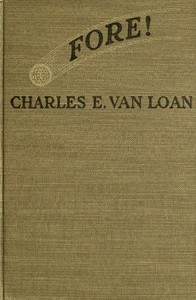
Fore! — Reading Companion
Young Readers Enchanted Adventures
80,779 recorded words. 4 minutes difference from this book's estimate.
View Gutenberg source #36682
Amusement Only — Edition Insights can be approached with a clearer sense of reading commitment from its source measurements: 79,980 words, 5 hr 48 min estimated reading time, and 11 detected text sections.
The text analysis averages about 11.6 words per sentence, while the detected sections provide another way to judge how the source is divided.
Project Gutenberg metadata also associates the work with “Fiction,” connecting these edition facts with the source record’s subject description.
Explore this collection
These alternatives are selected using recorded categories and estimated reading time.
About 352 minutes
Young Readers Enchanted Adventures
80,779 recorded words. 4 minutes difference from this book's estimate.
View Gutenberg source #36682About 363 minutes
Young Readers Enchanted Adventures
83,278 recorded words. 15 minutes difference from this book's estimate.
View Gutenberg source #38521About 328 minutes
Young Readers Enchanted Adventures
75,396 recorded words. 20 minutes difference from this book's estimate.
View Gutenberg source #37966Search stored excerpts and compare books → Choose by your preferences →
Choices use stored catalog measurements. Estimates vary with reading speed. A shared category is a catalog label, not a claim that two books have the same argument or literary quality.
Search reads excerpt text stored with this catalog and links to its associated Gutenberg record. The connection is stored in the site database; this tool does not recheck that every excerpt is word-for-word identical to that external record. Excerpt search does not cover every chapter and does not verify historical publication dates.
Catalog snapshot checked: 2026-09-26. Coverage: 93 public books, 93 available source excerpts.
Calculated from edition completeness, EPUB availability, text structure and catalogue metadata. Not a user rating.
Total of 100 points, scaled to a 2.5-5.0 range. Editions with an empty description or a missing EPUB file are not scored.
Public-domain source text
The source text is kept in the dedicated reader, separate from this catalogue record and its commentary.
Richard Marsh's Amusement Only (1901) opens with a mystery that is both absurd and unsettling: a duchess vanishes from her carriage between the drapers and home, yet the footman swears he shut the door after her. The Duke's irritation—'I told her she'd better be in by four'—sets a tone of domestic impatience that quickly curdles into something stranger. Marsh's prose moves briskly, layering mundane details (a watch, a salver, a coachman named Barnes) against an event that defies explanation. The narrator's voice, clipped and slightly sardonic, refuses to linger on the uncanny, a technique that recurs throughout the collection.
Marsh frequently leaves sentences hanging, as when the Duke begins 'She wasn't where?' and the coachman replies 'Her Grace wasn't in the carriage, your Grace.' The repetition of 'your Grace' becomes a rhythmic tic, underscoring the absurdity of the situation. In 'Aunt Jane's Jalap,' the narrator cuts himself off mid-thought: 'I could not, at my own table, take the man by the scruff of the neck and drop him from the first floor window. But I know that Margaret didn't like it—and I didn't either.' The dash signals a retreat from violence into social discomfort. These structural gaps mirror the stories' thematic gaps—what is left unsaid often matters more than what is spoken.
Conversations in Amusement Only are contests of wit and will. In 'The Lost Duchess,' the Duke's clipped commands ('Send him up') contrast with the servants' hesitant, qualifying speech ('Something a little singular has happened'). In 'Aunt Jane's Jalap,' the narrator parries with Pybus, who 'told some pleasant and characteristic anecdotes about injurious effects of patent medicines.' The exchange over the name 'Aunt Jane's Jalap'—Margaret's objection that it 'makes one think of indigestion'—is deflected with a pun: 'That's exactly what it's meant to do.' Marsh uses dialogue to expose social hierarchies and personal rivalries, often with a comic edge that veers toward cruelty.
The collection's tempo varies sharply between stories. 'The Lost Duchess' begins with a measured, almost bureaucratic pace—the Duke checks his watch, the footman salutes—before the mystery accelerates. In 'Aunt Jane's Jalap,' the pace is leisurely, dominated by dinner-table banter, until the bottle of medicine is produced and the tone darkens: 'I held it in my hand. "This, ladies and gentlemen, is 'Aunt Jane's Jalap."' The shift from social comedy to something more ominous is abrupt, and Marsh often withholds the payoff, leaving the reader suspended between genres. The excerpts suggest a collection that resists easy categorization, moving from farce to unease without warning.
Readers should approach Amusement Only as a series of narrative experiments rather than a unified whole. Marsh's willingness to undercut his own plots—a duchess lost, a patent medicine launched—with ironic asides or abrupt endings rewards attention to his craft. The stories are best read individually, allowing each shift in voice and pace to register without expectation of consistency. Pay particular attention to what the narrators choose not to say; the gaps are where the real amusement lies.
Reading Amusement Only, I keep noticing how Marsh half-smiles at his own plots, as if winking at us from a lamplit room. That same unhurried irony flickers through a companion volume I found lately, Tales from the Veld — Story, Setting & Ideas, where the wildness carries its own quiet shrug. Both feel like letters from another century, never quite serious, never quite not.
Use these questions to collect your thoughts before moving on.