About 254 minutes
Mathieu Ropars: et cetera — A Reader’s Guide
Young Readers Enchanted Adventures
58,294 recorded words. 4 minutes difference from this book's estimate.
View Gutenberg source #39132
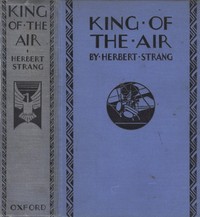
King of the Air; Or, To Morocco on an Aeroplane — Themes and Context can be approached with a clearer sense of reading commitment from its source measurements: 59,268 words, 4 hr 18 min estimated reading time, and 7 detected text sections.
The text analysis averages about 16.0 words per sentence, while the detected sections provide another way to judge how the source is divided.
Project Gutenberg metadata also associates the work with “Air travel -- Fiction,” connecting these edition facts with the source record’s subject description.
Explore this collection
These alternatives are selected using recorded categories and estimated reading time.
About 254 minutes
Young Readers Enchanted Adventures
58,294 recorded words. 4 minutes difference from this book's estimate.
View Gutenberg source #39132About 253 minutes
Young Readers Enchanted Adventures
58,001 recorded words. 5 minutes difference from this book's estimate.
View Gutenberg source #38419About 268 minutes
Young Readers Enchanted Adventures
61,570 recorded words. 10 minutes difference from this book's estimate.
View Gutenberg source #38830Search stored excerpts and compare books → Choose by your preferences →
Choices use stored catalog measurements. Estimates vary with reading speed. A shared category is a catalog label, not a claim that two books have the same argument or literary quality.
Search reads excerpt text stored with this catalog and links to its associated Gutenberg record. The connection is stored in the site database; this tool does not recheck that every excerpt is word-for-word identical to that external record. Excerpt search does not cover every chapter and does not verify historical publication dates.
Catalog snapshot checked: 2026-09-26. Coverage: 93 public books, 93 available source excerpts.
Calculated from edition completeness, EPUB availability, text structure and catalogue metadata. Not a user rating.
Total of 100 points, scaled to a 2.5-5.0 range. Editions with an empty description or a missing EPUB file are not scored.
Public-domain source text
The source text is kept in the dedicated reader, separate from this catalogue record and its commentary.
The opening chapter introduces Mr. John Greatorex as “very wealthy, and very obstinate,” a man who disclaims chemistry yet made a fortune in chemicals, and who insists on driving his new motor-car alone. This character sketch, with its wry tone and emphasis on stubborn self-reliance, sets a pattern for the young protagonists who follow. The catalog subjects—air travel and Morocco—are accurate but incomplete: the excerpts show that the airship is a means, not the focus, and that Morocco is a setting for encounters with a Jewish merchant named Salathiel ben Ezra and a sheikh, rather than a landscape described in detail.
The novel opens with a wealthy man who “saw no necessity to take a chauffeur” and a wife who hands him goggles with a worried question. This dynamic—confident independence versus cautious concern—recurs in the main plot. Tom and Oliphant, the boy aviators, repeatedly make decisions based on limited information and a refusal to wait for help. When they capture Salathiel, Tom decides to imprison him in a cave rather than use fuel to take him far away, saying “a day’s fasting won’t hurt him.” The reasoning is practical but also reveals a casual confidence in their own judgment. The text does not show them consulting maps, authorities, or local knowledge beyond Abdul’s brief comments. The narrative voice treats this self-reliance as admirable, not reckless.
Despite the title, the excerpts focus on captivity and bargaining. Tom and Oliphant spend Chapter X discussing how to “dispose of Salathiel” and later plan to “release Ingleton” from the sheikh. The airship is used for transport—lifting Salathiel into a cave, returning to a hilltop—but the drama comes from verbal exchanges: Salathiel protests, tries bribery, and is overruled. Tom tells him “ours is a prior engagement,” a line that could belong to a diplomatic mission. The catalog subject “Air travel” is thus a vehicle for a story about hostage-taking, negotiation, and the ethics of using force. The excerpts do not show any aerial combat, races, or technical descriptions of flight; the airship is a tool, like a horse or a boat.
Salathiel ben Ezra is introduced as a “fat friend” and a “peaceable merchant” who claims to be on his way to “treat with the sheikh of Ain Afroo for a supply of carpets.” Tom suspects he has “appropriated” Abdul’s property. The characterization relies on period stereotypes: the Jew as cunning, mercantile, and physically soft. The Moorish characters are less developed—Abdul is a helper who knows the caves, the sheikh is an offstage antagonist. The excerpts do not give interiority to either group; they are obstacles or aids. Readers should note that the novel’s portrayal of non-English characters is functional rather than nuanced, and that the catalog subject “Morocco” is a backdrop for English resourcefulness, not a setting explored on its own terms.
The excerpts suggest a story driven by quick decisions and physical action rather than by character development or setting. Readers interested in early airship fiction will find the technology taken for granted; those seeking a detailed portrait of Morocco will be disappointed. The novel’s value may lie in its period assumptions about nationality, commerce, and problem-solving. Approach it as a boys’ adventure of its time, where the airship is a plot device and the foreign setting is a stage for English ingenuity.
Reading about those boys negotiating with the sheikh reminded me of afternoons spent in my uncle's shed, haggling over broken radios. There's a similar quiet stubbornness in Cupid in Africa — Themes and Context, where the real journey isn't the landscape, but the slow, wary dance between people who must rely on each other. That feeling of improvised trust stayed with me long after I closed that book.
A brief reflection can help important ideas stay with you longer.