About 270 minutes
The Beauty — A Reader’s Guide
Young Readers Enchanted Adventures
61,884 recorded words. 2 minutes difference from this book's estimate.
View Gutenberg source #37549
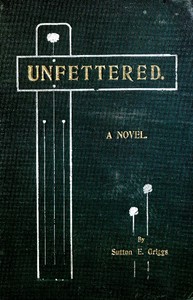
Before opening Unfettered: A Novel — Reading Companion, the edition data offers a quick orientation: 61,570 words, 4 hr 28 min estimated reading time, and 8 detected text sections.
The text analysis averages about 19.6 words per sentence, while the detected sections provide another way to judge how the source is divided.
Project Gutenberg metadata also associates the work with “African Americans -- Fiction,” connecting these edition facts with the source record’s subject description.
Explore this collection
These alternatives are selected using recorded categories and estimated reading time.
About 270 minutes
Young Readers Enchanted Adventures
61,884 recorded words. 2 minutes difference from this book's estimate.
View Gutenberg source #37549About 258 minutes
Young Readers Enchanted Adventures
59,268 recorded words. 10 minutes difference from this book's estimate.
View Gutenberg source #36443About 254 minutes
Young Readers Enchanted Adventures
58,294 recorded words. 14 minutes difference from this book's estimate.
View Gutenberg source #39132Search stored excerpts and compare books → Choose by your preferences →
Choices use stored catalog measurements. Estimates vary with reading speed. A shared category is a catalog label, not a claim that two books have the same argument or literary quality.
Search reads excerpt text stored with this catalog and links to its associated Gutenberg record. The connection is stored in the site database; this tool does not recheck that every excerpt is word-for-word identical to that external record. Excerpt search does not cover every chapter and does not verify historical publication dates.
Catalog snapshot checked: 2026-09-26. Coverage: 93 public books, 93 available source excerpts.
Calculated from edition completeness, EPUB availability, text structure and catalogue metadata. Not a user rating.
Total of 100 points, scaled to a 2.5-5.0 range. Editions with an empty description or a missing EPUB file are not scored.
Public-domain source text
The source text is kept in the dedicated reader, separate from this catalogue record and its commentary.
The author's preface to Unfettered announces its aim: to lead the reader into the inner life of the Negro race and lay bare the aspirations that are fructifying there. This is not a tale of angels or demons, Griggs warns, but of human beings—with one exception the reader must judge. The dedication, to a sister who read his earlier novel Overshadowed while dying, sets a tone of personal loss and endurance. The epigraph from Kelly Miller speaks of mental shackles more binding than physical chains. These framing devices signal that the novel will treat psychological and spiritual conflict as seriously as social struggle.
The preface does more than introduce; it challenges. Griggs writes that the nation once dealt with the Negro's woes amid battle—Fort Sumter, Bull Run, Gettysburg, Appomattox—but will now be summoned to deal with his strength. The novel is offered as a study of a race shaking itself loose from the death sleep of the ages. This language of awakening and final adjustment frames the story as a contribution to a national conversation. Readers should note that the preface explicitly rejects extremes: no angels, no demons, only human beings—with that one teasing exception. The ambiguity invites attention to how characters are portrayed, especially whether any figure transcends ordinary humanity.
In the excerpt from Chapter XX, Harry is consumed by a fixed purpose: to die in a way that looks like an accident. He considers falling asleep on train tracks or nursing contagious patients. The narrative dwells on his methodical planning, then pivots when he sees runaway horses carrying a white woman and three children. Harry murmurs, “Thank God! the way appears.” He intercepts the horses, is dragged, and dies after the crowd cheers. The scene is striking for its ambiguity: is this suicide, heroism, or both? Harry's earlier thoughts about accidental death color the act. The bystanders call him a fool; the lady wipes his blood. The chapter ends with his soul sped, leaving the reader to weigh intention against outcome.
Chapter XXI opens with Morlene arriving home to find crepe on the door. Harry has died that day. Her reaction is physical: she stands rooted, her eyes recording a storm of pity. She cries out, “Horror! Horror! Horror everywhere!” and questions why Harry could not have awaited her forgiveness. The narrative then describes her faith as rudely shaken, her soul shrinking from misanthropism. In a supreme effort to retain belief, she sings “Abide with Me.” The hymn's words—When other helpers fail, and comforts flee—echo her isolation. The tears in her eyes give way to submission. This moment reveals how personal loss intersects with spiritual crisis, a thread likely woven through the novel's treatment of race and resilience.
The table of contents shows a pattern: early chapters bear titles like “An Anglo-Saxon's Death,” “A Fallen Man Shoots,” “The Clans Gather,” and “An Act of Which Nobody Is Proud.” These suggest a narrative built around pivotal, often violent events. Later chapters introduce Dorlan Warthell and Morlene, with titles such as “Cupid Should Be More Careful” and “A Stormy Interview.” The shift from communal conflict to personal relationships mirrors the preface's promise to explore inner life. Readers should watch how the novel balances public action—riots, political maneuvering—with private anguish. The excerpted chapters show that even in moments of high drama, Griggs focuses on internal states: Harry's resolve, Morlene's faltering faith.
Griggs's novel rewards attention to its framing: the preface, dedication, and epigraph are not ornaments but keys to the story's moral architecture. As you read, note how characters' choices are shadowed by larger questions of fate, forgiveness, and racial destiny. The excerpts suggest that Unfettered is as much about the mind's shackles as society's.
The rain kept time with the pages of Unfettered, and I lingered on Morlene’s quiet sacrifice long after closing it. That afternoon’s mood—hushed, weighted—somehow drifted me toward Tales from the Veld — Story, Setting & Ideas, where the veld’s stillness held a similar gravity. I never planned the switch; it simply happened, like one story leaning into another.
Capture what you thought, learned, and would like to remember.