About 195 minutes
Lost Sir Massingberd: A Romance of Real Life. v. 2/2 — Inside the Classic
Young Readers Enchanted Adventures
44,634 recorded words. 6 minutes difference from this book's estimate.
View Gutenberg source #37171
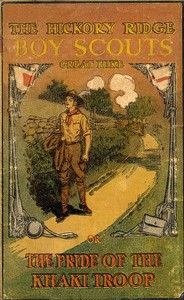
Great Hike; or, The Pride of the Khaki Troop — Background and Themes can be approached with a clearer sense of reading commitment from its source measurements: 46,195 words, 3 hr 21 min estimated reading time, and 7 detected text sections.
The text analysis averages about 17.5 words per sentence, while the detected sections provide another way to judge how the source is divided.
Project Gutenberg metadata also associates the work with “Boy Scouts of America -- Juvenile fiction,” connecting these edition facts with the source record’s subject description.
Explore this collection
These alternatives are selected using recorded categories and estimated reading time.
About 195 minutes
Young Readers Enchanted Adventures
44,634 recorded words. 6 minutes difference from this book's estimate.
View Gutenberg source #37171About 223 minutes
Young Readers Enchanted Adventures
51,103 recorded words. 22 minutes difference from this book's estimate.
View Gutenberg source #36604About 172 minutes
Young Readers Enchanted Adventures
39,455 recorded words. 29 minutes difference from this book's estimate.
View Gutenberg source #36715Search stored excerpts and compare books → Choose by your preferences →
Choices use stored catalog measurements. Estimates vary with reading speed. A shared category is a catalog label, not a claim that two books have the same argument or literary quality.
Search reads excerpt text stored with this catalog and links to its associated Gutenberg record. The connection is stored in the site database; this tool does not recheck that every excerpt is word-for-word identical to that external record. Excerpt search does not cover every chapter and does not verify historical publication dates.
Catalog snapshot checked: 2026-09-26. Coverage: 93 public books, 93 available source excerpts.
Calculated from edition completeness, EPUB availability, text structure and catalogue metadata. Not a user rating.
Total of 100 points, scaled to a 2.5-5.0 range. Editions with an empty description or a missing EPUB file are not scored.
Public-domain source text
The source text is kept in the dedicated reader, separate from this catalogue record and its commentary.
The excerpt from Great Hike; or, The Pride of the Khaki Troop centers on a long-distance hiking competition between scout patrols. The dialogue reveals a scheme by Fairfield outsiders—not scouts—to eliminate a leading Hickory Ridge competitor by offering a car ride or forcibly abducting him. The scout leader, Elmer, deduces the plot from overheard talk and from reading footprints in auto tire mud, a detail that showcases his practical woodcraft.
The catalog lists “Boy Scouts of America -- Juvenile fiction” and “Insects -- Juvenile literature,” but the excerpt contains no mention of insects or nature study. The focus is entirely on competitive hiking, rivalry, and the ethical boundaries of scout conduct.
Elmer’s method of detecting the car’s presence is a standout detail: he notes that “in several places your footprint was plainly marked in the tread of the auto tire in the mud.” This observation is not just clever—it is the key piece of evidence that confirms the car passed the scout. The excerpt emphasizes that Elmer “observed things closely and figured out results,” a trait that aligns with scout training but is demonstrated through a specific, concrete action rather than stated as a general virtue.
The text does not explain how Elmer learned this skill or whether it is part of formal scout instruction. The reader is left to infer that such practical tracking is part of the characters’ expertise, but the excerpt offers no broader nature lore or insect identification, despite the catalog subject listing “Insects -- Juvenile literature.”
The scheme is explicitly not the work of scouts. Elmer clarifies that “Nobody said a word about any scouts being connected with this thing.” The plotters are described as “some of the crowd that used to run with Matt Tubbs when he was the terror of the county,” and their leader is Eddie Johnston, “a bad egg.” This distinction preserves the scout organization’s integrity while introducing conflict from outside.
The dialogue also raises an ethical question: would a scout accept a tainted victory? Elmer hopes that Felix Wagner, the Fairfield competitor who would benefit, would “declare that he wouldn’t accept a tainted title.” The excerpt does not reveal whether Felix knows of the plot or how he responds, leaving the moral resolution unresolved in the available text.
The dialogue reveals character through speech patterns. Lil Artha, the tall scout, frequently “forgot there was such a thing as grammar in the wide world,” as when he says “if you don’t beat anything in finding out them tricks!” This colloquial, ungrammatical speech contrasts with Elmer’s more measured and precise language, such as “we don’t feel sure about it; but the chances are he doesn’t.”
The narrator occasionally interjects with commentary like “the one who observed things closely and figured out results,” which reinforces Elmer’s role as the perceptive leader. These stylistic choices give the characters distinct voices without relying on extensive description, and they ground the story in a specific, informal register typical of early twentieth-century boys’ adventure fiction.
Readers approaching Great Hike should note that the catalog’s “Insects” subject does not appear in the excerpt; the book’s focus is on hiking competition and scout ethics. The dialogue-driven narrative rewards attention to how characters speak and what they observe. The incomplete excerpt leaves the outcome of the sabotage plot unknown, but the moral stakes are clearly set: the pride of the Khaki Troop depends on fair play as much as on speed.
That gray afternoon, rain drumming the window while Great Hike sat open on my lap, I kept circling back to Elmer reading mud like a confession—how easily honor gets twisted by a stranger’s favor. The thought lingered, a quiet itch, until I stumbled onto The Bigamist — A Reader’s Guide and found the same unease, dressed in different rooms. Some secrets never leave the tires.
Create a short personal record of your experience with this book.