About 346 minutes
The Heart of Denise, and Other Tales — Reading Companion
Technology Airships Imagined Futures
79,580 recorded words. 13 minutes difference from this book's estimate.
View Gutenberg source #38284
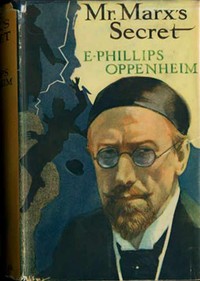
Before opening Mr. Marx's Secret — Reading Companion, the edition data offers a quick orientation: 82,461 words, 5 hr 59 min estimated reading time, and 12 detected text sections.
The text analysis averages about 14.3 words per sentence, while the detected sections provide another way to judge how the source is divided.
Project Gutenberg metadata also associates the work with “Fiction,” connecting these edition facts with the source record’s subject description.
Explore this collection
These alternatives are selected using recorded categories and estimated reading time.
About 346 minutes
Technology Airships Imagined Futures
79,580 recorded words. 13 minutes difference from this book's estimate.
View Gutenberg source #38284About 373 minutes
Technology Airships Imagined Futures
85,697 recorded words. 14 minutes difference from this book's estimate.
View Gutenberg source #37471About 340 minutes
Technology Airships Imagined Futures
78,060 recorded words. 19 minutes difference from this book's estimate.
View Gutenberg source #37204Search stored excerpts and compare books → Choose by your preferences →
Choices use stored catalog measurements. Estimates vary with reading speed. A shared category is a catalog label, not a claim that two books have the same argument or literary quality.
Search reads excerpt text stored with this catalog and links to its associated Gutenberg record. The connection is stored in the site database; this tool does not recheck that every excerpt is word-for-word identical to that external record. Excerpt search does not cover every chapter and does not verify historical publication dates.
Catalog snapshot checked: 2026-09-26. Coverage: 93 public books, 93 available source excerpts.
Calculated from edition completeness, EPUB availability, text structure and catalogue metadata. Not a user rating.
Total of 100 points, scaled to a 2.5-5.0 range. Editions with an empty description or a missing EPUB file are not scored.
Public-domain source text
The source text is kept in the dedicated reader, separate from this catalogue record and its commentary.
Oppenheim opens Mr. Marx's Secret with a detailed description of the narrator's Midland county home: a three-storeyed, ivy-clad farmhouse nestled against Rothland Wood, with Ravenor Park's fir spinneys and lichen-covered rock forming the foreground. The prose lingers on the visual texture of the landscape—'worn greystone,' 'black fir spinneys,' 'sombre grey towers'—establishing a setting that feels both picturesque and forbidding. This careful attention to place is not mere scene-painting; it establishes the narrator's intimate knowledge of his environment ('there was not a yard of the park ... which I did not know') and sets up a contrast with the flat, uncultivated common and 'foam-crested sea' he encounters later at Dr. Randall's coastal home. The shift in landscape mirrors a shift in the narrator's life, and Oppenheim uses the physical details to signal a transition into unknown territory.
Oppenheim's descriptive choices do more than locate the action; they encode moral and emotional states. The narrator's home is 'quaint' and 'ivy-clad,' nestled against a wood, with a park that is 'forbidden ground' yet intimately known. The language conveys a sense of sheltered, almost feudal order. In contrast, the coastal prospect is 'flat, uncultivated,' dotted with 'stunted gorse-bushes' and 'numerous sand-heaps,' under a 'grey, sunless sky' that gives the sea a 'dull, forbidding appearance.' The adjectives shift from the picturesque to the bleak, and the narrator's response—'something attractive in its novelty'—hints at a willingness to leave the known for the uncertain. Oppenheim reinforces this through the character of Dr. Randall, whose 'visionary' eyes and 'worn, thoughtful face' are introduced against the same coastal backdrop, as if the landscape itself produces or attracts such figures. The setting thus becomes a silent participant in the narrative, its contrasts prefiguring the moral choices the narrator will face.
Oppenheim crafts dialogue that reveals character through tone and implication rather than explicit statement. When the narrator first meets Dr. Randall, the exchange is brief but layered. Randall's opening remark—'Glad to see that you're an early riser, Mr. Morton. It's a habit which, I'm sorry to say, my other pupils have not acquired'—immediately establishes a contrast between the narrator and the existing pupils, Silchester and de Cartienne. The doctor's tone is genial but carries a note of resigned disapproval. The narrator's reply—'Perhaps they haven't lived all their lives in the country, sir, as I have'—is polite but subtly defensive, asserting his own rural discipline. Randall's subsequent vivâ-voce examination is summarized rather than dramatized, but the result—'You are almost as advanced as de Cartienne and far more so than Silchester'—serves to rank the characters intellectually. Oppenheim then undercuts the warmth of the scene by noting Randall's habit of mental wandering: 'for nearly a quarter of an hour he remained absorbed.' This small detail humanizes the doctor while hinting at a mind preoccupied with matters beyond the immediate conversation.
One of Oppenheim's most striking authorial choices is his use of physical description to suggest moral binaries. In a key passage, the narrator compares Cecil Silchester's 'boyish, handsome face, a trifle dissipated just now, but open and candid,' with the 'pale, sallow countenance, the large black eyes, and cynical, callous expression' of his friend de Cartienne. The contrast is almost allegorical: 'the face of the tempted to the face of the tempter.' Oppenheim does not rely on interior monologue to convey the narrator's unease; instead, he externalizes it through visual detail. The 'exultant ring' in de Cartienne's tone and 'something which seemed to express a latent power to reverse the result with ease' further deepen the sense of menace. This technique—embedding moral judgment in physical description—recurs throughout the excerpts, as when the narrator sizes up the servant James as 'a servant whom it would be easy to bribe.' The reader is invited to read character from appearance, a convention of the detective-mystery genre that Oppenheim handles with economical precision.
Oppenheim employs a first-person narrator whose perceptions are consistently filtered through his own background and biases. The narrator's judgments—of de Cartienne as a 'tempter,' of James as bribable, of Dr. Randall as a 'student' and 'visionary'—are presented as facts but are clearly subjective. This is most evident in the scene where the narrator, having just arrived at the coastal house, reflects on the previous night's activities: 'bearing in mind the evident habits and last night's occupation of Silchester and de Cartienne, I had begun to wonder somewhat apprehensively what manner of man the master of such pupils might be.' The phrase 'evident habits' is telling; the narrator has already formed a conclusion based on limited observation. Oppenheim thus creates a tension between what the narrator reports and what the reader might infer. The narrator's relief at finding Dr. Randall 'careless and dishevelled' yet scholarly suggests a naivety that may color subsequent events. This narrative unreliability is a deliberate authorial choice, inviting the reader to question the narrator's interpretations even as they follow his account.
Oppenheim's prose rewards attention to the small, deliberate choices: the shift from ivy-clad farmhouse to stunted gorse-bushes, the contrast between candid and cynical faces, the narrator's quick judgments that may or may not be trustworthy. Readers attuned to these details will find that the mystery of Mr. Marx's secret is as much about how the story is told as about what is hidden. The novel operates within the conventions of its genre, but Oppenheim's handling of description and dialogue gives it a distinctive texture—one that repays close reading.
The rain made the coastal contrasts in Oppenheim’s novel feel sharper, that clean moral line between salt air and village shadow. Later, I found myself drifting to Shelley’s letters, where the same weather seems to blur such distinctions entirely. A different kind of interior landscape, less certain, more human. The Life and Letters of Mary Wollstonecraft Shelley, Volume 1 (of 2) — A Reader’s Guide stayed with me long after the rain stopped.
Use these questions to collect your thoughts before moving on.