About 407 minutes
Cupid in Africa — Themes and Context
Young Readers Enchanted Adventures
93,433 recorded words. 1 minutes difference from this book's estimate.
View Gutenberg source #37544
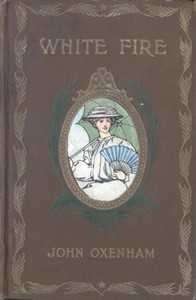
The catalog record for White Fire — Reading Notes provides practical reading context through 93,231 words, 6 hr 46 min estimated reading time, and 11 detected text sections.
The text analysis averages about 17.9 words per sentence, while the detected sections provide another way to judge how the source is divided.
Project Gutenberg metadata also associates the work with “Missionaries -- Fiction,” connecting these edition facts with the source record’s subject description.
Explore this collection
These alternatives are selected using recorded categories and estimated reading time.
About 407 minutes
Young Readers Enchanted Adventures
93,433 recorded words. 1 minutes difference from this book's estimate.
View Gutenberg source #37544About 372 minutes
Young Readers Enchanted Adventures
85,517 recorded words. 34 minutes difference from this book's estimate.
View Gutenberg source #37261About 363 minutes
Young Readers Enchanted Adventures
83,278 recorded words. 43 minutes difference from this book's estimate.
View Gutenberg source #38521Search stored excerpts and compare books → Choose by your preferences →
Choices use stored catalog measurements. Estimates vary with reading speed. A shared category is a catalog label, not a claim that two books have the same argument or literary quality.
Search reads excerpt text stored with this catalog and links to its associated Gutenberg record. The connection is stored in the site database; this tool does not recheck that every excerpt is word-for-word identical to that external record. Excerpt search does not cover every chapter and does not verify historical publication dates.
Catalog snapshot checked: 2026-09-26. Coverage: 93 public books, 93 available source excerpts.
Calculated from edition completeness, EPUB availability, text structure and catalogue metadata. Not a user rating.
Total of 100 points, scaled to a 2.5-5.0 range. Editions with an empty description or a missing EPUB file are not scored.
Public-domain source text
The source text is kept in the dedicated reader, separate from this catalogue record and its commentary.
The novel opens with a striking portrait of a 'dainty little figure' whose appearance draws the gaze of bare-armed women in a Scottish close, immediately establishing a contrast between refined femininity and the rough surroundings. This figure, soon identified as Jean, is introduced through the eyes of the community, setting up a pattern of observation and judgment that recurs throughout the excerpts. The narrative voice shifts quickly to the mission field, where Aunt Jannet's zeal for clothing the 'terribly naked' islanders clashes with Kenneth Blair's insistence on 'example first, then precept.' This early conflict between impulsive reform and patient diplomacy frames the central tension of the work.
The first chapter, 'Miss Inquisitive,' introduces Jean as a figure of curiosity and charm, but the narrative quickly moves to the mission settlement. The description of the landscape—'the spear of white sand at the head of the bay,' the 'great ridge, full of cracks and cavities'—is precise and evocative, grounding the story in a specific geography. The reader is shown the island's dual nature: the calm lagoon side and the 'white shell beach' where 'no boat built by man could survive the tumult of the surf.' This physical setting mirrors the cultural collisions to come. Aunt Jannet's well-meaning but dangerous insistence on clothing the islanders is met with Blair's firm correction: 'If you want to kill them, clothe them.' The excerpts reveal a narrative that values gradual understanding over hasty action.
Kenneth Blair emerges as a figure of measured authority, advocating for 'leading' rather than 'driving' the islanders. His approach is contrasted with Aunt Jannet's desire for 'prompt and radical measures.' The text notes that 'his own example was an inspiration to them all,' suggesting that the narrative endorses his method. The excerpts show the mission's daily realities: the 'timid brown women and round-faced, pot-bellied youngsters' who flee at the sight of Aunt Jannet, and the 'constant collision' between her warm heart and Blair's experience. The reader is positioned to observe this dynamic without yet knowing its outcome. The dedication to James Chalmers, a missionary killed in New Guinea, hints at the dangers that may lie ahead, but the excerpts do not confirm any specific plot events.
The excerpts offer a detailed view of the islanders' customs, filtered through the missionaries' perspectives. The women 'rubbing themselves all over with that nasty rotten coco-nut oil' and the children 'slipping and tumbling like seals in the creaming rollers' are described with a mix of ethnographic curiosity and condescension. The narrative voice is firmly aligned with the British characters, using terms like 'big brown children' and 'black object-lesson' (a chapter title). The reader is invited to consider the assumptions underlying these descriptions. The chapter titles themselves—'A Black Object-Lesson,' 'Clipping a Blackbird,' 'The Scourge of God'—suggest a story that grapples with colonial and missionary themes, though the excerpts do not reveal how these are resolved.
The table of contents reveals a narrative arc that moves from personal drama ('Leap Year,' 'A Sudden Wide Horizon') to mission challenges ('First Fruits,' 'Setbacks') and potentially violent conflict ('The Flaming Sword,' 'Peace with a Spear'). The illustration captions—'One Sign of Flinching and It Is Finished,' 'My Life Is Forfeit to the Past'—suggest moments of high tension. The frontispiece, missing from the text, depicts figures moving 'step by step, with eyes for every rock and bush,' evoking a sense of perilous journey. The final chapter, 'Salt of the Earth,' implies a resolution that values steadfastness. These structural elements guide a first reader to expect a story of personal and communal transformation, with the mission's success or failure hanging in the balance.
As you begin White Fire, pay attention to the interplay between the Scottish and island settings, and to the differing philosophies of the missionaries. The novel's title, drawn from a prefatory poem about 'the white fire of a great enthusiasm,' suggests that passion—whether for reform, faith, or love—will be a driving force. The excerpts offer a rich but incomplete view; the full text will reveal how these forces shape the characters' fates.
I’ve always treasured the patience in White Fire, how its layered notes let a story settle like tidewater. It reminds me of another favorite shelf-companion, Yekl: A Tale of the New York Ghetto — Edition Insights, where displacement and longing whisper in a different tongue. Both wear their strangeness gently, inviting quiet rereading, not hurried understanding.
A brief reflection can help important ideas stay with you longer.